



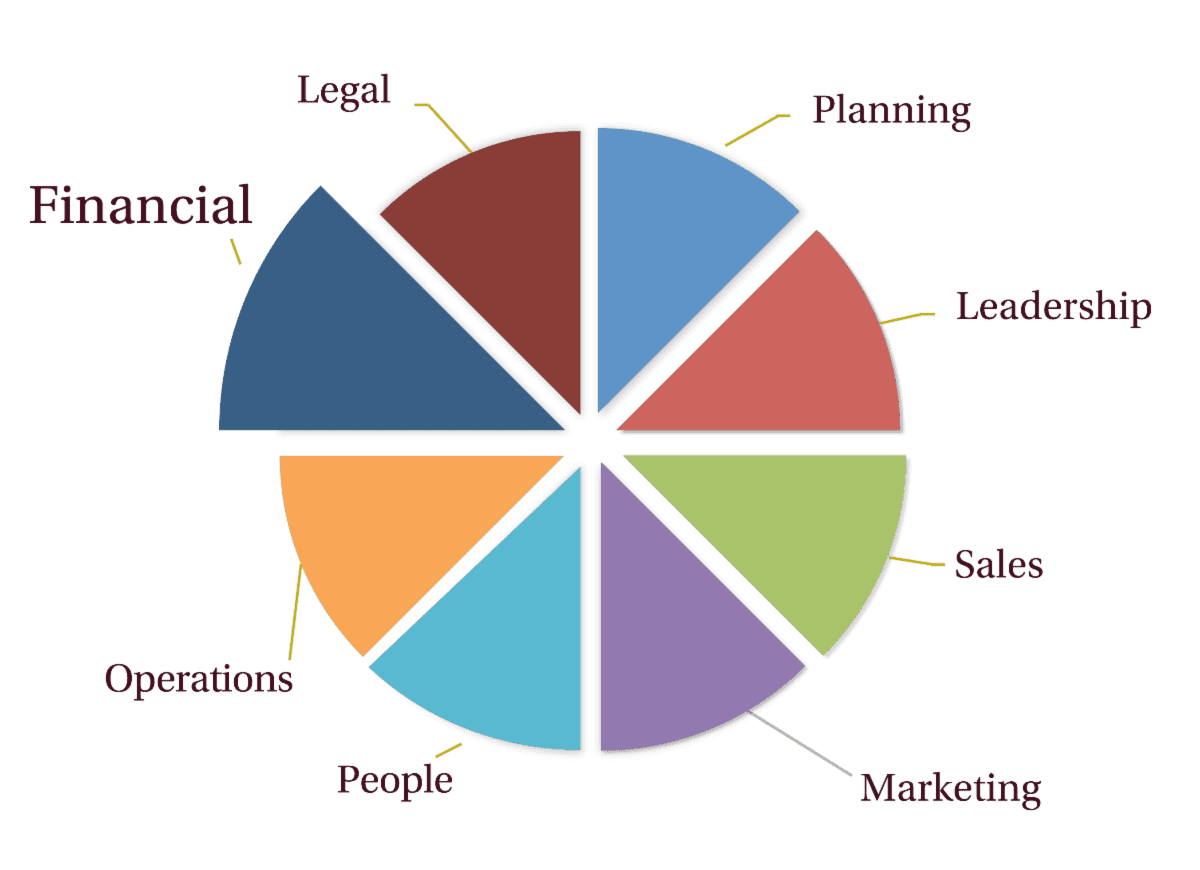
Several types of financial statements are available to provide business owners with insights to track their company’s performance and financial health. Some of the most commonly used are the profit/loss statement (income statement), the balance sheet, and the cash flow statement. An argument can be made for the importance of each — as well as for any specialized financial metric that relates to your specific business.
Many entrepreneurs begin their careers worried about cash in the bank. Eventually they move on to tracking profit and loss numbers, then cash flow. Eventually, some land on the balance sheet as their metric of choice. The balance sheet has our vote, too, as the most valuable single financial tool. It calculates a company’s total assets along with its liabilities and equity, which can tell us about the company’s ability to pay for operating costs, meet future debt obligations, and make distributions to owners. This data can help provide a snapshot of the that business holds.

There are literally hundreds of metrics to choose from. It’s up to you to craft a dashboard with a few select ones and check them regularly. A good plan is to pick five that are most important to your company and check them on a weekly basis.
Checking your dashboard will allow you to spot trends, see how different strategies pay off (or don’t), and adjust accordingly. You can also get an idea of how your business is performing compared to industry standards. That said, remember that “industry standard” means average — and you want to be above average! Seeing how your metrics stack up against others in your industry will help you gain insight on how to become best in class. Then, after measuring your performance over a period of time, the goal will be beating your own best metrics.

“What’s measured improves.”
–Peter Drucker, founder of modern management theory
Without metrics, there is no way to know if anything has improved or declined — let alone what factors affected that outcome. A weight-loss plan begins with a number on the scale; runners know how fast they can run the mile; and educators measure their students’ knowledge with every assignment, quiz, and test. If you want to take your business seriously, get comfortable with metrics.
