
What is value growth and value acceleration?
We use these terms often, because increasing value is at the core of what we do.
When a business goes to market, potential buyers look at qualitative factors such as customer satisfaction, brand strength, operational efficiency, and leadership quality. Growing that value over time — and accelerating the rate of growth the business already has — means optimizing key drivers.
At the same time, we improve other non-tangible factors that allow an owner more flexibility and make the business less dependent on them. This, too, adds to the value when potential buyers look at how a business runs.
Simply put, how easily can you sell it, at the appropriate time, and how much will you obtain from that sale? If a business is not transferable, it has no value.
Whether value growth and value acceleration are approached as a steady, long-term strategy or a more focused, short-term effort, the ultimate goal is to increase the company’s market value and position it for sustainable success or a strategic transition.
As a business owner, why should I concentrate on value rather than revenue or profit?
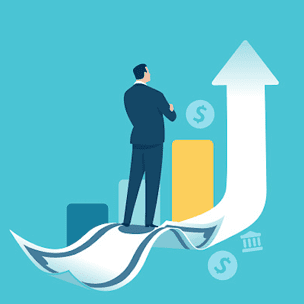
Many business owners think of value and profit as two separate buckets, not realizing that one is feeding the other. Profit can be misleading. High profits do not always mean you have a valuable business.
For instance, a business that relies heavily on the owner might be profitable but not necessarily transferable — as buyers will see that it cannot run without tremendous effort from the current (or new) owner. People don’t want to buy a job, they want to buy a business. Better yet, they want a good return on investment.
Value growth accomplishes the following benefits, while creating profit as a by-product:
- Sustainable wealth creation: Value growth builds long-term wealth rather than short-term income, along with a higher sale price at transfer.
- Business attractiveness: With a high-value business, you attract more investors, partners, and potential buyers. This increases your options not just when you exit but during the entire time you run your business.
- Risk reduction: Growing value means reducing dependency on an owner, diversifying revenue streams, and improving operational efficiency — all of which lowers a business’s risk.
- Scalability and efficiency: Value-driven strategies focus on systems, processes, and talent development. These same things make a business scalable and efficient.
- Legacy and impact: Building a valuable business ensures a positive legacy, allowing for smooth succession planning and long-term impact on your industry and community.
