

September 2019 Newsletter

Fundamentals:Operations – Part 2
“Management is doing things right;
leadership is doing the right things.”
– Peter Drucker
“To achieve great things, two things are needed;
a plan and not quite enough time.”
- Leonard Bernstein
What are Operations?
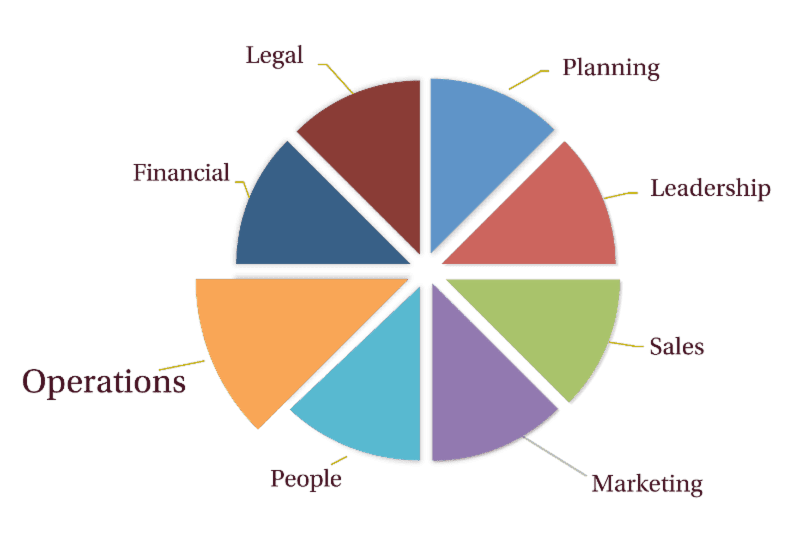
As discussed last time, the purpose of operations is to manage the resources needed to create your company’s products and services. It involves having the systems and processes in place to deliver on the promises made to your customers in an efficient and effective manner, while providing the opportunity to scale up, thereby increasing the value of your business.
A basic operations function encompasses development of a detailed plan to achieve optimum balance of needs or demands with the available resources. The planning process addresses the following:
(1) identifies the goals or objectives to be achieved
(2) formulates strategies and tactics to achieve them
(3) arranges or creates the means required
(4) implements, directs, and monitors all steps in their proper sequence
At this point, you may want to consider bringing on a Chief Operating Officer (COO), either as a fulltime C-level team member or on an outsource basis. Many owners, especially in smaller firms, run all aspects of the company, including operations. COOs take on a large share of this responsibility when it comes to day-to-day operations and continual improvement of the firm’s efficiency. They must know what’s going on in every area, including marketing, sales, manufacturing, and finance. COOs report directly to the CEO and oversee various department heads and mid-level executives. A strong COO reduces the company’s risk, which increases its value.
Especially for those thinking about making a successful transition out of the company, it is important to begin giving up some operating responsibilities now. Ask yourself, is it time to create a COO position and fill it with a good leader?

The Five D’s: Divorce
“In every marriage more than a week old, there are
grounds for divorce. The trick is to find, and continue to find,
grounds for marriage.”
– R. Anderson
In our last newsletter, I introduced the concept of the “Five D’s,” five major events that can create severe disorder in a business. These are:
- Disagreement
- Divorce
- Disability
- Distress
- Death
It is imperative that owners have a contingency plan for each to give the business a fighting chance of surviving with the business intact. According to Web MD, the second item on our list, divorce , is also the second most stressful life event, wedged between the death of a loved one and moving to a new home.
The mental, emotional and financial trauma of divorce can create serious consequences insofar as how owners run their businesses, treat their employees and customers, and even pay their vendors. At the very least, it provides distractions that can keep your organization from running at peak efficiency; at its worst, the cost of divorce can drain the company coffers and drive it into bankruptcy.
Many owners don’t see it coming or think it could never happen to them.
Early preparation is the best defense, which may include a prenup, placing the business in a trust and creating a detailed buy-sell agreement.
If looming or in process, with the court classifying your business as marital property (acquired during your marriage), it is important to maintain good records and obtain a professional independent valuation. Then if you need to transfer a portion of the business or pay for a portion of the business under a court-order to your ex-spouse, it will make things easier to have arranged to make payments over time.
One piece of good news is that it's unusual for a business to be sold off completely to satisfy a divorce settlement, as it would deprive the business owner of the future income needed to pay support payments.

"Inspect what you expect! In my career I have often found that ownership and managers rely on staff reports without ever taking the time to actually conduct a physical inspection. We all have different standards for cleaning, organizing, presentation, etc. If you aren’t inspecting what your people are cleaning, how do you know they are meeting your standards? If you haven’t checked the stock room lately, how do you really know it’s ordered properly? If you haven’t watched how your team greets a guest, how do you know it’s an acceptable greeting?" -Sheri Long
If you’d like your favorite saying featured in a future newsletter, please email it, along with a brief commentary, to ChuckM@EagleCorporateAdvisors.com.

Entrepreneurs, when starting out, often wear many hats and perform many tasks. But if the company is going to grow and evolve over time, the owners need to perform less hands-on technician work — in the words of “E-Myth” author Michael Gerber — and more process-driven managerial work. But how do they break out of their rut to make that leap?
It may require bringing in an objective outside specialist to provide professional assistance. This is one of the reasons Eagle Corporate Advisors was founded — to bring Chuck’s more than 25 years of experience to bear on challenges facing business owners. And to show them a new way of doing things that can put them on the right track; no matter their goals.