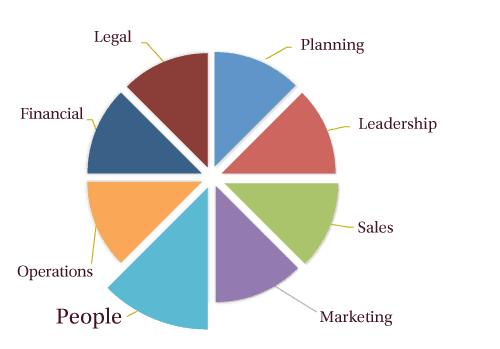
In his best-selling business strategy book “Good to Great,” Jim Collins introduces the bus metaphor. If you think of your business as a bus, the idea is to make sure the right people are in the right seats. Organizing that bus — defining what each person in each seat is responsible for — is a core part of shaping how your business functions.
As corporate advisors, the biggest problem we see in terms of how people’s roles are organized is that they aren’t. Many business owners will simply avoid the task if they can. In part, this is because hiring good people comes with a hidden liability: they self-manage, which makes it easy to remove yourself from the equation.
When we meet with key personnel, we first want to understand what each person thinks their role is. We find out how they spend their time and what they are doing now. This reveals structural weaknesses and inequalities that need to be addressed, giving us data on what to adjust.
A few problem “characters” tend to pop up in the absence of clearly defined roles and responsibilities. These include a “critical keeper,” someone who has become so essential that the company might not survive without them, and a “bottleneck,” someone who wants to see and approve absolutely everything. When we identify these characters in a company, it’s imperative to adjust roles so that no one person carries too many responsibilities or slows down operations. It’s not just a matter of fairness or streamlining, it’s about protecting the value and viability of your business.
So why is it important to look at the seats on your bus and give attention to how each role is defined? This organizational work benefits your business in the following areas:
- Clarifying how workload should be shared
- Determining salaries
- Determining accountability
- Hiring (knowing what you’re looking for when a position is open)
- Giving people ownership of their roles and authority to accomplish tasks
- Guiding advancement (so employees know how to move up)
- Smoothing transitions at all levels
- Identifying gaps where work falls through cracks
This assessment must include your role as the owner of your company, too. Business owners who don’t put thought into defining and recording their duties end up doing anything and everything! If you are the “critical keeper” at your business, then selling that business as a viable operation becomes impossible — and to have any value, it must be transferrable.
The process does not end after an initial breakdown of tasks and assignment of responsibilities. These roles must be communicated, so all team members understand who is covering what. That next step is creating a living document that records each position, and then making that document accessible. This should address who to collaborate with on projects, who to call if a problem arises, and who to praise for a job well done.
Be careful you are defining roles in the company, not simply looking at the specific people in those roles right now. Your document should address parameters for positions in the company rather than describe personalities. The success of each person is best reviewed formally on a quarterly basis, and more often on an informal basis, as team members learn their responsibilities and hold themselves accountable.
“In good teams, coaches are responsible for holding players accountable; in great teams, players hold each other accountable.”
–Joe Dumars, former Detroit Piston, current NBA executive vice president and head of basketball operations
For many owners, the “people” part of running a business can be the most difficult. After all, having employees who are underperforming or overperforming can present problems. Eagle Corporate Advisors provides an outside perspective. We are experienced at asking the right questions and pinpointing where roles are poorly defined or have become tangled, lopsided or inefficient over time. Our goal is to increase the value of your business, and having a clear record of the responsibilities for each of your company’s positions creates stability and value for the long term. Call us today to set up a meeting and discuss your goals, or c
lick here to take our free Altitude Assessment.